

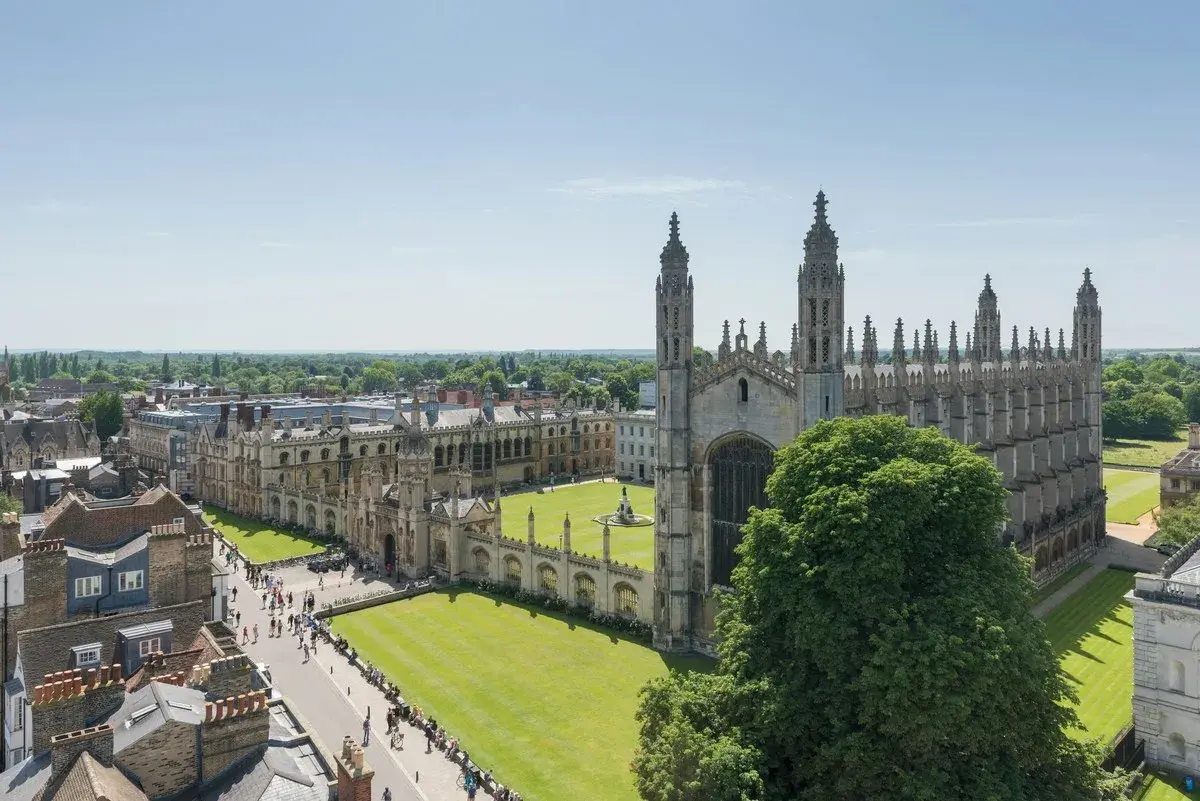
Cambridge, England, is internationally recognised not only for its historic university but also as a dynamic hub of innovation. Over recent decades, it has evolved into one of the most significant centres for science, research and technology in Europe.
Origins of innovation
The city’s transformation is rooted in the academic excellence of the University of Cambridge, whose research environment has long encouraged curiosity and experimentation. Many of the world’s most influential scientists, from Isaac Newton to Rosalind Franklin and Stephen Hawking, have conducted their work there. This tradition of discovery laid the foundation for a thriving innovation ecosystem.
The Cambridge cluster
The modern technology landscape around the city — often referred to as the
Cambridge Cluster or Silicon Fen — began developing in the late twentieth
century. It now encompasses over 5,000 knowledge-intensive companies,
employing tens of thousands of people in sectors such as biotechnology, artificial
intelligence, medical science and clean energy. These companies benefit from close collaboration with university departments, research institutes and innovation centres. Many began as university spin-offs before expanding globally. Examples include ARM, a world-leading semi-conductor and software design firm, and AstraZeneca, whose global headquarters are now located in Cambridge.
Institutions supporting growth
The region’s development is supported by organisations such as Cambridge
Enterprise, which helps researchers and students bring new ideas to market,
and Innovate Cambridge, which seeks to create an inclusive and ambitious
vision for the city’s innovation future. Business incubators and science parks,
such as the Cambridge Science Park and the Babraham Research Campus,
provide infrastructure and networks for start-ups to thrive.
Collaboration and community
One of Cambridge’s defining features is the collaboration between academia,
business and government. Researchers, investors and entrepreneurs operate in
close proximity, often sharing facilities and expertise. This collaborative culture
accelerates knowledge exchange and reduces the barriers between theoretical
research and practical application.
A global model
Cambridge’s success has become a model for innovation ecosystems worldwide.
The city combines world-class research, entrepreneurial spirit, and a supportive
policy environment. Its scale — compact but globally connected — enables the
rapid translation of ideas into products and services that address global
challenges, from medical diagnostics to sustainable energy.
The future of Cambridge innovation
As the world looks to new solutions for sustainability, healthcare and digital
transformation, Cambridge continues to play a leading role. Projects like Innovate
Cambridge aim to ensure growth remains inclusive, environmentally responsible
and globally relevant. The city’s mix of heritage and forward-thinking innovation
makes it a unique environment where ideas become impactful realities.
Conclusion
From its historic university halls to its modern laboratories and start-up
accelerators, Cambridge embodies the union of knowledge and enterprise. It
stands today as a global symbol of how education, collaboration and innovation
can together drive scientific and technological progress.