

For ambitious international students considering studying in the UK, the Universities of Oxford and Cambridge are understandably attractive. Both have outstanding international reputations, centuries of academic history and highly distinctive approaches to undergraduate teaching. They are also two of the most competitive universities in the world to enter.
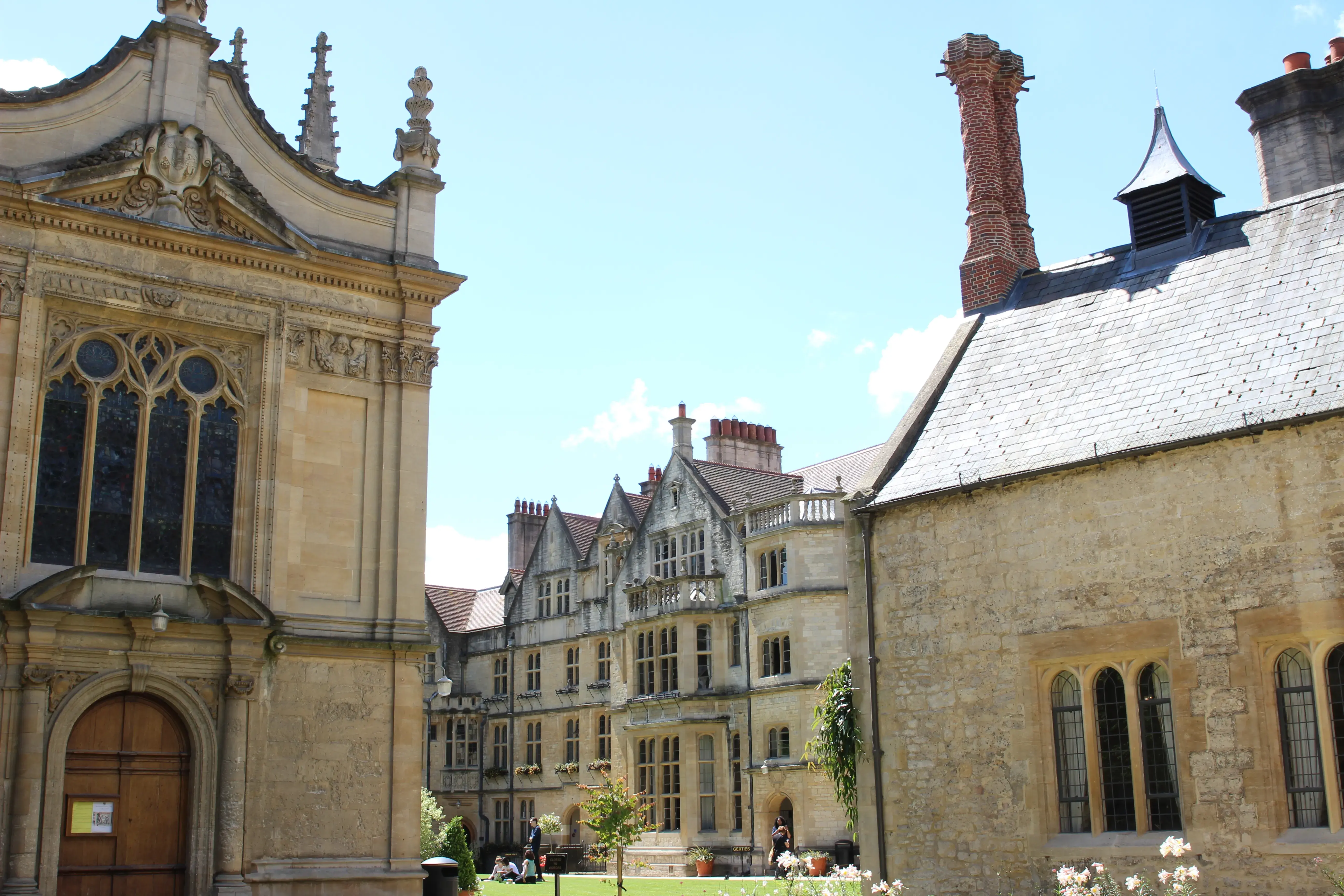
Applying to Oxford or Cambridge - often collectively referred to as "Oxbridge" - is therefore quite different from making a typical university application. Excellent school grades are essential, but grades alone do not guarantee an offer. Depending on the course, students may also face an admissions test, submit examples of written work and attend academic interviews. International applicants may additionally need to demonstrate a very high level of English.
Understanding this process early is extremely important. If you are thinking about applying, preparation should ideally begin well before your final year of school.
Oxford or Cambridge - can you apply to both?
One of the first things international students need to know is that undergraduate applicants cannot normally apply to Oxford and Cambridge in the same admissions cycle. You will therefore need to decide which university - and, more importantly, which course - is right for you.
This decision should not simply be based on which university you think is more prestigious. Courses with similar names can be structured quite differently at Oxford and Cambridge. Before deciding where to apply, look carefully at what you would actually study, how the course is taught and the academic requirements for entry.
Both universities also operate collegiate systems. Students belong to a college as well as the wider university, and applicants can usually choose a college or make an open application. Your choice of college should not replace the more fundamental decision about which degree course best matches your academic interests.
What are Oxford and Cambridge actually looking for?
International students sometimes assume that a successful Oxbridge application requires a huge collection of extracurricular activities. This is not really how either university describes its selection process.
Oxford says that its admissions process is designed to identify students with the academic ability, curiosity and motivation to thrive in its tutorial environment. It assesses the different parts of an application together, which can include previous academic achievement, predicted grades, admissions tests, submitted work, interviews, references and the UCAS application.
Cambridge similarly emphasises academic ability and potential. It looks for students who can think critically and independently, are open to new ideas, can work logically through problems and have a genuine enthusiasm for the subject they want to study.
This distinction is important. Being captain of a sports team, playing three musical instruments or completing numerous unrelated extracurricular activities will not compensate for a weak academic application. Oxford explicitly states that extracurricular activities are not considered unless they are relevant to the course and help demonstrate the relevant selection criteria.
What matters much more is academic engagement with your subject.
If you want to study History, for example, what have you explored beyond your normal school syllabus? What have you read? Which historical questions have interested you? Have you encountered interpretations with which you disagree? If you want to study Physics, Mathematics or Engineering, how have you developed your understanding beyond the minimum requirements of your school curriculum?
Oxford and Cambridge are not simply looking for students who are very good at passing school examinations. They are trying to identify students who have the potential to become excellent university students.
Academic requirements for international students
Both universities accept a wide range of international qualifications, but requirements vary considerably according to the course and the qualification system in your country.
International students should therefore never assume that a qualification accepted by one British university will automatically meet Oxford or Cambridge requirements. You should check the university's current international entry requirements for your country and then check the individual requirements for your chosen course.
The required grades are extremely high. Oxford's standard A-level offers, for example, range from AAA to A*A*A depending on the course, with equivalent expectations for international qualifications. Cambridge also publishes minimum offer levels for each course and specific requirements for international qualifications.
Subject choice matters too. Some degrees require applicants to have studied particular subjects at an advanced level. This is one reason students who are seriously considering Oxford or Cambridge should begin researching courses early rather than waiting until they are ready to submit an application.
How good does your English need to be?
For an international student, English proficiency deserves particular attention. It is easy to think about this simply in terms of obtaining the required IELTS score. In reality, the level of English needed to succeed at Oxford or Cambridge goes considerably beyond passing a language test. Oxford currently requires the higher level of English proficiency for all its undergraduate courses. For IELTS Academic, this means an overall score of 7.5, with at least 7.0 in each component.
Cambridge normally expects an IELTS Academic score of 7.5 overall, usually with 7.0 or above in each component. Cambridge may also accept certain school-leaving qualifications or Cambridge English qualifications as evidence of the necessary standard. International applicants should always check the current requirements before booking an English examination because accepted tests and conditions can change.
More importantly, consider what these requirements represent. An Oxbridge student needs to be able to read difficult material quickly, follow lectures, discuss complex ideas with academics, write sophisticated essays and defend an argument under questioning. At interview, students also need enough confidence in their English to think aloud and respond naturally when presented with unfamiliar ideas. For an international applicant, developing academic English should therefore be viewed as part of preparing for Oxford or Cambridge itself, not simply preparation for IELTS.
When should you start preparing?
Earlier than many students expect.
For students hoping to begin university in autumn 2027, the main Oxford and Cambridge UCAS deadline is 15 October 2026 at 6pm UK time. This is considerably earlier than the main January deadline used by most other UK university courses. A serious candidate should therefore not wait until September to begin thinking about the application.
The year before applying is an excellent time to investigate courses and begin exploring your chosen subject independently. This might involve reading books and academic articles, attending lectures or relevant events, listening to university-level podcasts, completing projects or exploring particular questions that genuinely interest you. By spring and early summer of the application year, students should understand the entry requirements for their chosen course and know whether they will need to take an admissions test or submit written work. They should also begin preparing their UCAS application well before the October deadline.
The UCAS application
Applications to both Oxford and Cambridge are made through UCAS, the central application system for UK universities. For 2027 entry, applications to Oxford and Cambridge must reach UCAS by 6pm UK time on 15 October 2026. Your application includes your academic record, predicted qualifications where appropriate, an academic reference and your UCAS personal statement responses.
Cambridge applicants normally have an additional step after submitting UCAS: My Cambridge Application. For the main 2027 admissions cycle, this must be submitted by 6pm UK time on 22 October 2026. International applicants may also need to provide a transcript, and Cambridge recommends arranging this early because obtaining one can take several weeks. It is also important to remember that you cannot apply to Oxford and Cambridge in the same year.
Has the UCAS personal statement changed?
Yes. Students familiar with the traditional UCAS personal statement need to be aware that its format has changed. Instead of one continuous piece of writing, applicants now respond to three questions. These ask, broadly, why you want to study the course, how your studies have prepared you for it, and what you have done outside formal education that has helped prepare you and why those experiences are useful.
The overall allowance remains 4,000 characters, with a minimum number of characters required for each response. The change in format does not change the fundamental purpose of the personal statement. For an Oxford or Cambridge application, it should demonstrate genuine intellectual engagement with your chosen subject.
Simply writing that you have "always been passionate about science" tells an admissions tutor very little. Describing a particular idea, book, experiment or problem that changed the way you thought about your subject is much more revealing. Oxford's own guidance makes a useful point here: simply listing books you have read is not particularly helpful. What matters is explaining what you learned from them and how they affected your understanding.
Your personal statement should therefore provide evidence of intellectual curiosity rather than a catalogue of achievements.
Admissions tests
Depending on the subject you choose, you may need to take an admissions test. This is an area where students need to be especially careful about using current information because arrangements change. For 2027 entry, Oxford has changed parts of its admissions testing system and is using UAT-UK tests including the ESAT, TMUA and TARA for relevant courses, alongside the LNAT for Law and UCAT for Medicine.
Cambridge also uses admissions assessments for particular courses. For 2027 entry, for example, the ESAT is required for courses including Engineering and Natural Sciences, while the TMUA is required for subjects including Computer Science, Economics and Mathematics. Medicine applicants take the UCAT, and Law applicants take the LNAT. Other courses may have College assessments or different requirements.
The important lesson is not to assume that every applicant sits the same "Oxbridge test". The test - or whether there is a test at all - depends on the university and course. Check your course page early, find out the registration deadline and become familiar with the format. Missing a registration deadline can mean that your application cannot proceed.
Will you need to submit written work?
Some courses require candidates to submit examples of their written work. At Oxford, applicants for relevant courses should check the specific requirements carefully; for 2027 entry, required written work generally needs to be submitted by 10 November 2026.
Cambridge requirements also vary according to course and College. For example, some humanities courses require applicants to submit essays or other school work so that admissions tutors can see how they construct arguments, use evidence and communicate ideas. International applicants should pay particular attention to language requirements for submitted work. Cambridge states that requested examples of written work need to be in English, although work originally written in another language can be translated into English.
The purpose is not necessarily to find a perfectly polished piece of writing. Tutors are interested in the student's academic thinking: how ideas are organised, how evidence is handled and how an argument is developed.
What happens at an Oxbridge interview?
The interview is perhaps the most famous - and most misunderstood - part of applying to Oxford or Cambridge. It is not intended to be a test of confidence, social polish or whether you know the answer to every possible question. Both universities describe interviews primarily as academic conversations.
Oxford's interviews resemble the tutorial style of teaching used at the university. Tutors may introduce unfamiliar material or ideas and ask candidates to work through them. They want to see how you think, how you respond when challenged and whether you can adapt your reasoning when new information is introduced. Cambridge describes similar qualities. Its interviews help assess understanding of the chosen subject, readiness for high-level academic study, critical and independent thinking, curiosity and openness to new ideas.
This means memorising impressive-sounding answers is unlikely to be useful. An interviewer may deliberately take the conversation somewhere unexpected. What matters is being able to listen carefully, explain your reasoning and engage with the problem.
For international students, this is another reason spoken English is so important. You need enough fluency and confidence to concentrate on the idea you are discussing, rather than devoting all your attention to finding the English words needed to express it.
For 2027 entry, Oxford's shortlisted applicants will have online interviews in December 2026. At Cambridge, most interviews will take place between 7 and 18 December 2026, although the exact arrangements can depend on the College and applicant.
Do you need to attend an Open Day?
No. Attending an Open Day is not a requirement for admission, and an international student will not disadvantage their application by being unable to travel to the UK simply to visit the university. However, if attending is practical, an Open Day can be extremely useful. It gives students an opportunity to explore colleges, departments and the city and to ask questions about courses and student life.
For 2026, Oxford's undergraduate Open Days are 1 July, 2 July and 18 September. Cambridge's next 2026 Colleges Open Day is 11 September.
International students who cannot attend should make use of the substantial online resources offered by both universities, including virtual tours, course information, videos and online applicant events.The purpose of an Open Day should be to help you decide whether you actually want to study there - not to demonstrate enthusiasm to admissions tutors.
A possible timeline for an international applicant
For a student aiming to start at Oxford or Cambridge in 2027, the application develops over a much longer period than the UCAS form itself might suggest.
During 2025 and early 2026, a prospective applicant could begin researching courses and exploring their subject beyond school. By spring 2026, they should be checking international qualification requirements, considering their choice between Oxford and Cambridge and investigating whether their course requires an admissions test. The summer before applying is a particularly valuable preparation period. Students can work on academic English, read around their subject, begin their UCAS responses and start preparing for any required admissions assessment.
By September, the application should already be well advanced. Admissions-test registration deadlines can fall before the UCAS deadline, so these need to be monitored carefully. The main UCAS application then needs to be submitted by 15 October 2026. Cambridge applicants have the additional My Cambridge Application deadline on 22 October. November may involve submitting written work and preparing for interviews. Interviews generally take place in December, with Oxford decisions for 2027 entry due on 12 January 2027 and Cambridge's main-cycle decisions due on 27 January 2027.
Preparing your English for an Oxbridge application
International applicants sometimes make the mistake of separating "English preparation" from "academic preparation". For Oxford and Cambridge, the two are closely connected. Advanced vocabulary matters, but students also need to know how to use that vocabulary naturally and precisely. Strong academic writing matters, but this involves far more than eliminating grammatical mistakes. Students need to structure complex arguments, evaluate evidence, compare competing ideas and communicate their conclusions clearly.
Speaking practice should similarly move beyond rehearsed presentations or memorised IELTS responses. An Oxbridge applicant needs to become comfortable discussing unfamiliar ideas, explaining an opinion, responding to disagreement and changing an argument when presented with new evidence. Reading widely in English is particularly valuable. It develops vocabulary and comprehension while simultaneously allowing students to explore their chosen academic subject. For students who are not educated primarily in English, becoming comfortable reading sophisticated material without constantly translating it can make an enormous difference.
Academic potential rather than perfection
Perhaps the most useful thing for an international student to understand is what Oxford and Cambridge mean by academic potential. They are not looking for someone who already knows everything about their chosen subject. If they were, there would be little point in going to university.
They are looking for evidence that a student is capable of learning at an exceptionally high level. That means intellectual curiosity, strong academic foundations, an ability to analyse information, willingness to reconsider ideas and genuine enthusiasm for studying a subject in considerable depth. An interview question you initially struggle with is therefore not necessarily a disaster. Being able to take a hint, reconsider your reasoning and arrive at a better answer can reveal precisely the sort of intellectual flexibility tutors want to see.
The same principle applies throughout the application. Admissions tests, written work, academic records, personal statements and interviews provide different opportunities for applicants to demonstrate their ability and potential.
Final thoughts
Applying to Oxford or Cambridge as an international student is demanding, but the process becomes much more manageable when preparation begins early.
Start with the course rather than the university's reputation. Check that your qualifications meet the international entry requirements, investigate admissions tests well in advance and give yourself enough time to develop genuine knowledge and curiosity beyond your school curriculum.
If English is not your first language, don't focus exclusively on achieving the minimum IELTS score. The real objective should be reaching a level at which English no longer prevents you from demonstrating how well you can think. You should be able to read demanding academic material, write sophisticated arguments and discuss unfamiliar ideas confidently and naturally.
Ultimately, a successful Oxford or Cambridge application is not about constructing an image of the "perfect applicant". It is about demonstrating that you have the academic ability, curiosity and potential to thrive in one of the world's most demanding university environments.
*Admissions requirements and dates are correct for 2027 entry at the time of publication. Applicants should always check the official Oxford, Cambridge and UCAS websites for the latest requirements.*